
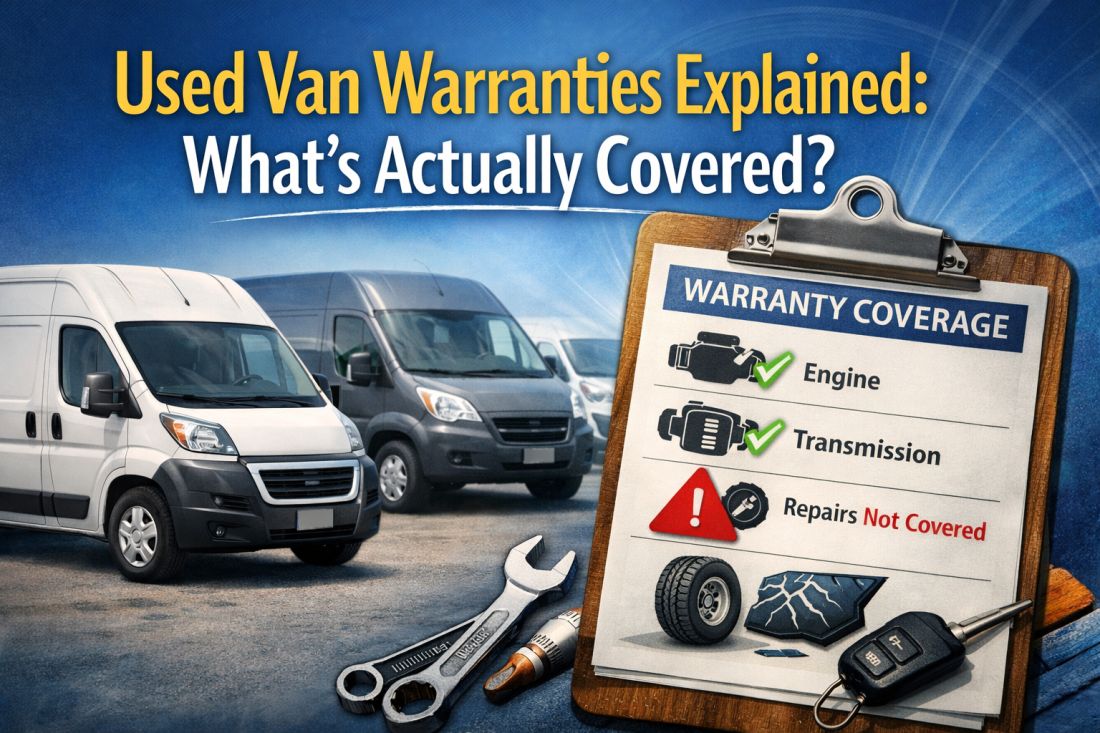
Used Van Warranties Explained: What’s Actually Covered?
A used van warranty is designed to protect you from unexpected repair costs, covering key mechanical and electrical components such as the engine, gearbox, and electrical systems. Depending on the level of van warranty cover, you may also benefit from extras like breakdown cover included, vehicle hire, and roadside assistance warranty.
However, not everything is covered. Common exclusions include wear and tear items, pre-existing faults, and maintenance-related issues.
Understanding the difference between manufacturer warranty vs extended warranty, the warranty claim process, and the fine print in warranty terms and conditions is essential if you want true vehicle warranty protection and peace of mind motoring.
Introduction: Why Used Van Warranties Matter
Buying a used van is a smart move, whether you're expanding your business fleet or upgrading your daily workhorse. But alongside the savings comes a question many buyers overlook:
What happens when something goes wrong?
That’s where a warranty for used vans becomes essential. A well-structured used vehicle warranty acts as a financial safety net, shielding you from costly repairs that can quickly spiral into thousands.
If you're browsing options like used vans for sale, understanding your warranty options isn’t just helpful—it’s critical.
A single gearbox failure can cost more than an entire year’s warranty plan.
This guide breaks down everything you need to know—from what is a van warranty, to what’s actually covered, and what to watch out for in the small print.
What Is a Van Warranty?
At its core, a van warranty explained simply is this:
A warranty is a contractual agreement that covers the cost of repairing or replacing certain vehicle components if they fail within a set period.
Unlike insurance, which protects against accidents or theft, a used van warranty focuses specifically on mechanical and electrical cover.
Key Features of a Van Warranty
Covers unexpected repair costs
Includes parts and labour cover
May offer repair cost contribution
Often requires use of approved repairers or garages
Comes with defined warranty duration (12, 24, 36 months)
Depending on the provider, you’ll also encounter different van warranty plans, ranging from basic to comprehensive.
Manufacturer Warranty vs Extended Warranty
Understanding the difference between these two is crucial when evaluating your options.
Manufacturer Warranty
Provided by brands like Volkswagen, Ford, or Mercedes-Benz
Typically lasts 3–5 years from new
Covers most major components
Often transferable to new owners
If you're exploring premium models like used Volkswagen vans, some may still have remaining manufacturer cover.
Extended Van Warranty
Purchased separately after the original warranty expires
Offered by third-party warranty providers or dealerships
Flexible coverage levels and durations
Ideal for older or higher-mileage vehicles
This is where most buyers of used vans will find themselves—choosing an extended van warranty to maintain protection.
How Does a Van Warranty Work?
The process is more straightforward than many expect, but the details matter.
Step-by-Step Warranty Process
Fault occurs – A covered component fails
Diagnosis – Vehicle is inspected at an approved garage
Claim submitted – The garage contacts the warranty provider
Approval – Based on your warranty terms and conditions
Repair completed – Costs covered fully or partially
Important Considerations
Some warranties include an excess fee
There may be claim limits per repair
You must follow servicing schedules to avoid invalid warranty
Missing a scheduled service is one of the most common reasons for rejected claims.
Types of Van Warranty Plans
Not all warranties are created equal. Understanding the structure of van warranty plans helps you choose wisely.
1. Basic Warranty (Powertrain Cover)
Engine components
Gearbox and transmission
Limited mechanical parts
Best for: Budget-conscious buyers looking for minimal protection
2. Mid-Range Warranty
Everything in basic
Electrical systems
Fuel system faults
Steering and suspension
Best for: Everyday users who want balanced cover
3. Comprehensive Warranty
Full mechanical and electrical cover
Air conditioning systems
Multimedia systems
Driver assistance systems
Additional perks like vehicle hire cover and onward travel expenses
Best for: Maximum peace of mind motoring
If you're considering reliable work vans like used Citroën vans or used Peugeot vans, a mid-range or comprehensive plan is often the most practical choice.
Insured vs Discretionary Warranties
This is one of the most overlooked aspects when comparing van warranty providers.
Insured Warranty
Backed by an insurance company
Regulated and more secure
Clear terms and guaranteed payouts
Discretionary Warranty
Decisions made case-by-case
Not always guaranteed
Often cheaper, but riskier
If reliability matters, insured warranties typically offer stronger protection.
How Long Does a Van Warranty Last?
The warranty duration varies depending on the provider and plan:
12 months – Most common
24 months – Better long-term value
36 months – Maximum coverage
You’ll also need to consider:
Mileage and age limits
Whether a warranty extension is available
For higher-mileage vehicles—like some used Ford vans—checking eligibility criteria is essential before purchasing cover.
Is a Van Warranty Worth It?
This is one of the most searched questions: is a van warranty worth it?
The answer depends on your situation—but consider this:
Without a Warranty
Engine repair: £1,500–£5,000
Gearbox replacement: £1,000–£3,000
Electrical faults: £300–£1,500
With a Warranty
Fixed monthly or annual van warranty cost
Predictable expenses
Reduced financial risk
For most drivers, especially business users, a warranty provides essential financial protection for repairs.
What Does a Used Van Warranty Cover?
Now we get to the question most buyers really care about:
what does a used van warranty cover?
While coverage varies between providers and plans, most van warranty cover is built around protecting the most expensive and failure-prone parts of your vehicle.
The goal is simple: protect you from major, unexpected repair costs—not routine maintenance.
Core Components Typically Covered
A standard used vehicle warranty—especially mid-range or comprehensive—will usually include the following:
Engine Components
Cylinder head and internal parts
Pistons, crankshaft, and camshaft
Timing chains and belts (in some plans)
Gearbox and Transmission
Manual and automatic gearboxes
Torque converter
Clutch components (sometimes partially covered)
Electrical Systems
Starter motor and alternator
ECU (engine control unit)
Wiring and sensors
Other Mechanical Parts
Fuel system faults
Steering and suspension
Braking system components
If you're investing in premium vehicles like used Mercedes-Benz vans or dependable workhorses like used Renault vans, these core protections are where your warranty delivers the most value.
What’s Included in More Comprehensive Plans?
Higher-tier extended van warranty options often go beyond the basics and include additional features that improve convenience and reduce downtime.
Added Coverage Benefits
Air conditioning systems
Multimedia systems and infotainment
Driver assistance systems
Emissions failure and MOT failure cover
Extra Perks
Breakdown assistance
Roadside assistance warranty
Vehicle hire cover
Onward travel expenses
These extras are especially valuable for businesses where vehicle downtime directly impacts income.
Real-World Example: What a Warranty Might Cover
Imagine this scenario:
Your van develops a gearbox fault 6 months after purchase.
Without a warranty:
Diagnosis: £100
Repair: £1,200+
With a warranty:
Covered under gearbox and transmission
You may only pay a small excess
This is where vehicle warranty protection proves its worth.
What Does a Van Warranty NOT Cover?
Understanding what does a van warranty not cover is just as important as knowing what it does.
This is where many buyers get caught out.
Common Exclusions
Most warranty terms and conditions will exclude:
Wear and tear items (e.g. brake pads, tyres)
Serviceable parts (filters, fluids, clutch friction plates)
Pre-existing faults
Maintenance-related issues
Cosmetic damage
Situational Exclusions
Unauthorised repairs
Missed servicing schedules
Modifications to the vehicle
If you don’t follow servicing requirements, your warranty could become invalid overnight.
Warranty Small Print Explained
The van warranty small print explained section is where you separate a good deal from a bad one.
Here’s what to look for:
Key Clauses to Check
Claim limits – Maximum payout per repair
Excess fees – Your contribution per claim
Labour rate caps – Some warranties limit hourly rates
Parts contribution – Especially on older vehicles
Red Flags
Vague or discretionary wording
Lack of clear warranty claim process
Too many exclusions in core systems
Always read the warranty exclusions list UK providers supply—this is where the real story is.
Inspections, Servicing, and Keeping Your Warranty Valid
To maintain your warranty for used vans, you must meet certain obligations.
How to Avoid Invalidating Your Warranty
Stick to manufacturer servicing schedules
Keep full service records
Use VAT-registered or approved repairers
Report faults early
Failing to meet these conditions is one of the top warranty claim rejection reasons.
Warranty vs Van Insurance: Know the Difference
This is a common misunderstanding.
Van Warranty
Covers mechanical and electrical failures
Helps with repair costs
Optional purchase
Van Insurance
Covers accidents, theft, and damage
Legally required
Does NOT cover breakdowns
A warranty complements insurance—it doesn’t replace it.
Warranty vs Maintenance Plan
Another key distinction often overlooked:
Warranty
Covers faults and failures
Reactive protection
Maintenance Plan
Covers servicing and upkeep
Preventative care
For complete protection, many drivers combine both.
Common Van Failures Covered by Warranty
Understanding common van failures covered by warranty helps highlight real value.
Frequent Issues
Turbocharger failure
Injector problems
Electrical faults
Suspension wear (in higher-tier plans)
Cooling system issues
These are not rare—and without a used van warranty, they can be expensive.
Does Van Warranty Include Breakdown Cover?
The answer: sometimes.
Many modern van warranty plans include:
Breakdown cover included
Roadside recovery
Home start assistance
However, this is not guaranteed—always check before buying.
Can You Choose Your Own Garage?
Another common question:
can I choose my own garage warranty?
The answer depends on the provider:
Some require approved repairers / garages
Others allow your preferred VAT-registered garage
This flexibility can be important for convenience and trust.
How to Choose the Right Van Warranty
With so many van warranty providers, choosing the right one can feel overwhelming.
Key Factors to Consider
Level of cover (basic vs comprehensive)
Warranty duration
Claim limits and excess
Provider reputation
Included extras
If you're planning your purchase alongside a finance option, exploring van finance options can help spread both vehicle and warranty costs more manageably.
Comparing Van Warranty Plans: What Really Matters?
By now, you understand how a used van warranty works and what it typically covers. The final step is choosing the right one.
But here’s the problem: many buyers focus only on price.
The cheapest option is rarely the best when it comes to vehicle warranty protection.
To properly compare van warranty plans, you need to look deeper.
Key Criteria for Comparing Warranties
When evaluating different van warranty providers, use this checklist:
1. Level of Cover
Does it include full mechanical and electrical cover?
Are major components like engine and gearbox fully protected?
2. Claim Limits
Maximum payout per claim
Total annual claim limits
3. Excess Fees
Fixed or variable excess
Cost per repair claim
4. Labour Rate Caps
Does the provider limit hourly labour charges?
5. Included Extras
Breakdown cover included
Roadside assistance warranty
Vehicle hire cover
6. Flexibility
Can you choose your own garage?
Are there mileage or age limits?
A strong warranty balances cost, coverage, and flexibility—not just price.
Van Warranty Cost in the UK: What Should You Expect?
The van warranty cost varies depending on several factors.
Average Price Ranges
Basic plans: £200–£400 per year
Mid-range plans: £400–£700 per year
Comprehensive plans: £700–£1,200+ per year
What Affects the Cost?
Vehicle age and mileage
Type of van (e.g. premium vs standard)
Level of cover
Warranty duration (12, 24, 36 months)
For example, a high-spec van from brands available at Carlton Motor Co may require a higher-tier plan due to more advanced systems.
Cheap vs Comprehensive: What’s the Better Choice?
Searching for the cheapest van warranty UK option is tempting—but it often comes with trade-offs.
Cheap Warranty Plans
Pros:
Lower upfront cost
Basic protection
Cons:
Limited coverage
Lower claim limits
More exclusions
Comprehensive Warranty Plans
Pros:
Broader coverage
Higher claim limits
Includes extras like breakdown assistance
Cons:
Higher cost
If you rely on your van daily, comprehensive cover usually delivers better long-term value.
Best Van Warranty UK Providers: What to Look For
Rather than chasing brand names, focus on quality indicators when choosing among the best extended van warranty UK providers.
Signs of a Reliable Provider
Clear and transparent warranty terms and conditions
Strong customer reviews
Fast and simple warranty claim process
Insured (not discretionary) backing
Wide network of approved repairers
Is Extended Van Warranty Worth It UK?
Let’s answer one of the most important questions directly:
Is extended van warranty worth it UK drivers?
It’s Worth It If:
You rely on your van for work
You want predictable costs
Your van is out of manufacturer warranty
You want protection against major failures
It May Not Be Worth It If:
You can comfortably afford unexpected repairs
You drive very low mileage
The warranty has too many exclusions
For most business users, the answer is yes—especially when downtime equals lost income.
Real Cost Comparison: Warranty vs No Warranty
Let’s put things into perspective.
Without Warranty
Turbo failure: £1,000–£2,500
Injector replacement: £800–£2,000
Electrical system fault: £300–£1,500
With Warranty
Annual cost: £400–£800 (average)
Predictable expenses
Reduced financial risk
This is why financial protection for repairs is one of the biggest selling points of any used vehicle warranty.
How to Choose a Van Warranty (Step-by-Step)
If you’re still unsure how to choose a van warranty, follow this simple process:
Step 1: Assess Your Needs
Daily business use vs occasional driving
Age and mileage of your van
Step 2: Decide Coverage Level
Basic, mid-range, or comprehensive
Step 3: Compare Providers
Look beyond price
Check reviews and claim success rates
Step 4: Read the Small Print
Understand exclusions
Check claim limits and excess
Step 5: Confirm Extras
Breakdown cover included?
Roadside assistance warranty?
Final Thoughts: Making the Right Decision
Choosing the right warranty for used vans isn’t about ticking a box—it’s about protecting your investment.
Whether you're browsing used vans or narrowing down options like used Ford vans, used Peugeot vans, or used Citroën vans, your warranty should match how you actually use your vehicle.
The best warranty is the one that pays out when you need it—not the one that looks good on paper.
Frequently Asked Questions
Below are 10 more commonly asked questions about used van warranties that haven’t been covered in the main article, helping you build a complete understanding before choosing the right cover.
1. Are used van warranties transferable to a new owner?
In many cases, yes. Some van warranty providers allow warranties to be transferred when the vehicle is sold, which can increase resale value. However, there may be an admin fee or specific conditions in the warranty terms and conditions.
2. Is there a waiting period before I can make a claim?
Most used vehicle warranty plans include a waiting period (typically 14–30 days) before you can make a claim. This prevents claims for pre-existing faults.
3. Do van warranties cover high-mileage vehicles?
Yes, but options may be limited. A van warranty for high mileage vehicles often comes with:
Lower claim limits
Higher excess fees
More exclusions
Always check mileage caps before purchasing.
4. Can I cancel my van warranty?
Many providers offer a cooling-off period (usually 14 days). After that, cancellations may be possible, but refunds are often prorated and subject to fees.
5. Does a warranty cover diagnostic costs?
Some van warranty plans include diagnostic fees as part of the claim, while others require you to pay upfront unless the repair is approved.
6. Are all parts replaced with new components?
Not always. Depending on the provider, repairs may use:
New parts
Reconditioned parts
Equivalent quality replacements
This will be outlined in your warranty terms and conditions.
7. What happens if my claim exceeds the warranty limit?
If repair costs exceed your claim limit, you’ll need to cover the difference. This is why understanding warranty excess and claim limits explained is essential before choosing a plan.
8. Do warranties cover vans used for business purposes?
Yes, but you must declare usage. Many policies are specifically designed for commercial use, but failing to disclose this could invalidate your vehicle warranty protection.
9. Can I get a warranty on any used van?
Most vans are eligible, but restrictions apply based on:
Age of the vehicle
Mileage
Service history
Older vans may only qualify for basic van warranty cover.
10. How quickly are warranty claims approved?
Approval times vary, but most claims are processed within 24–72 hours once diagnostics are complete. Delays usually occur if:
Documentation is missing
Repairs begin without approval
The issue falls into a grey area of coverage
A smooth warranty claim process often depends on following the correct steps and using approved repairers.