
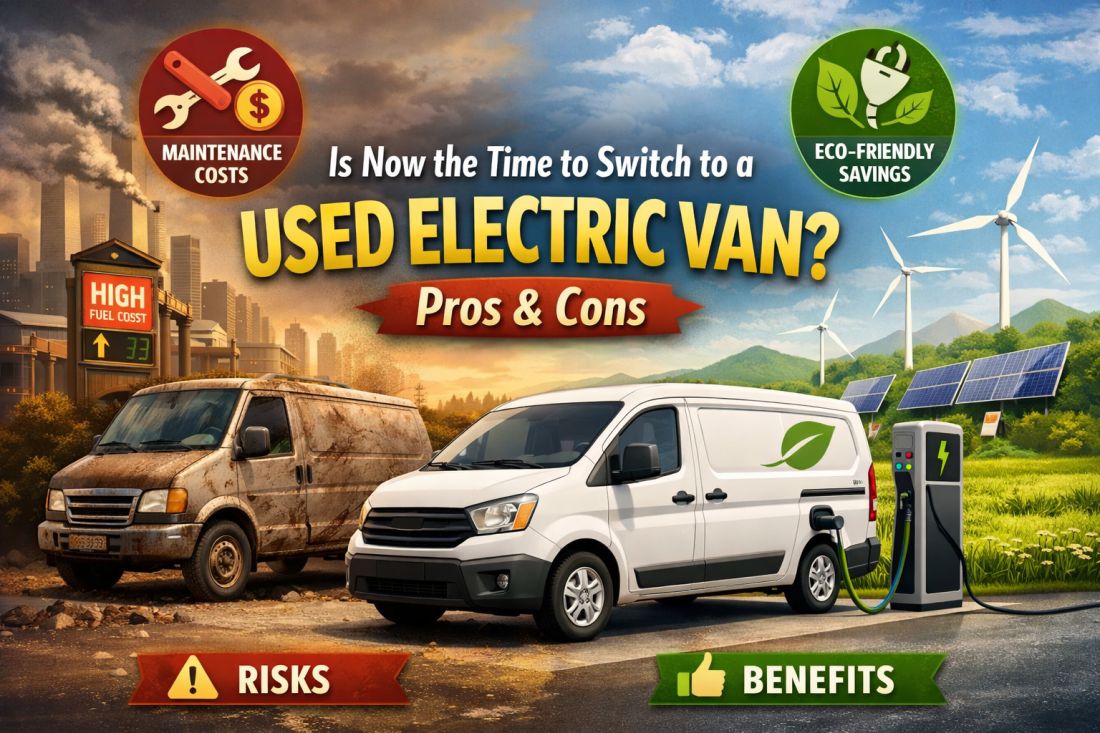
Is Now the Time to Switch to a Used Electric Van? Pros & Cons
If you're considering switching to a used electric van, the short answer is: for many drivers and businesses in 2026, it’s becoming a smart financial and practical move—but not without trade-offs.
- Costs are falling thanks to electric vehicle depreciation and a surge in second-hand supply
- Running costs are significantly lower than diesel, especially with home charging
- Battery health is more reliable than many assume, with most EVs retaining strong performance
- However, charging infrastructure limitations and range concerns still matter—especially for high-mileage users
- Best suited for: urban driving, short-to-medium routes, and businesses targeting fleet cost reduction
- Less ideal for: long-distance logistics without reliable charging access
In short, a used electric vehicle (EV)—particularly a van—can offer excellent value and sustainability benefits, but your driving habits and charging access will ultimately determine whether now is the right time.
The Shift Toward Used Electric Vans in the UK
The UK automotive market is undergoing a quiet but powerful transformation. What was once a niche category—electric vans—is now becoming a mainstream consideration for businesses and private buyers alike.
Rising fuel costs, tightening emissions regulations, and the expansion of low emission zones UK are pushing more drivers toward eco-friendly transport. At the same time, a surge in ex-fleet vehicles has led to a used EV price drop, making buying a used EV far more accessible than even a few years ago.
If you browse the current selection of used vans available, you’ll notice a growing presence of second-hand electric vehicles, alongside traditional diesel options. This reflects a broader shift in electric vehicle adoption trends across the UK.
The question is no longer if electric vans are viable—it’s whether now is the right moment to make the switch.
Why Used Electric Vans Are Gaining Popularity
1. Falling Prices and EV Depreciation
One of the biggest drivers behind the rise of the used electric van UK market is depreciation.
Electric vehicles historically lose value faster in their early years. While that may concern new buyers, it creates a huge advantage for second-hand buyers.
- Cheaper than new electric vehicle models
- Significant used EV price drop due to increasing supply
- More affordable electric vehicles entering the market
This means you can now access high-quality electric vans—often with modern tech and decent range—at a fraction of their original price.
For businesses, this directly impacts the total cost of ownership EV, making fleet electrification far more viable.
2. Lower Running Costs (Where EVs Really Win)
The upfront cost is only part of the story. The real advantage of electric vehicle ownership lies in ongoing savings.
Compared to diesel vans:
- EV running costs are significantly lower
- The cost of charging electric vehicle is often cheaper than fuel
- Home charging cost savings can dramatically reduce expenses
- Fewer moving parts = reduced servicing costs
- Lower long-term EV maintenance costs
For example, businesses operating in urban areas can benefit from:
- Reduced fuel spend
- Exemptions or savings in clean air zone benefits
- Predictable daily charging cycles
If you're exploring ways to spread the upfront investment, options like vehicle finance solutions can make transitioning to electric even more manageable.
3. Ideal for Urban Driving and Short Routes
Electric vans shine in urban logistics electrification.
If your daily operations involve:
- City deliveries
- Local service routes
- Predictable mileage
Then a used electric van offers strong short commute EV suitability.
Key advantages include:
- Smooth, quiet driving experience
- Instant torque for stop-start traffic
- No tailpipe emissions—perfect for zero emissions driving zones
However, it's important to match the daily driving range electric vehicle with your actual usage. For many drivers, modern used EVs comfortably cover daily needs.
Understanding EV Battery Health: Myth vs Reality
One of the most common concerns when considering a second-hand electric vehicle is battery performance.
Let’s address it directly.
Battery Degradation: Overstated but Still Important
Yes, battery degradation electric vehicle is real—but often misunderstood.
Modern EVs are designed with durable lithium-ion systems. In most cases:
- EV battery lifespan exceeds 8–15 years
- Many vehicles retain 70–90% capacity after several years
- EV battery capacity loss tends to slow over time
What matters more is:
- Proper battery diagnostics / battery health check
- Understanding EV charging cycles
- Reviewing the battery warranty EV
Mileage alone is not the best indicator—mileage vs battery condition depends heavily on how the vehicle was charged and used.
What About Replacement Costs?
The concern around battery replacement cost EV is valid—but increasingly less relevant.
- Many used EVs are still under warranty
- Replacement costs are gradually falling
- Failures are relatively rare compared to public perception
In fact, the reliability of electric vehicles—thanks to fewer mechanical components—often outweighs battery concerns.
The Expanding Choice of Electric Vans
While early adopters had limited options, today’s buyers can choose from a growing range of models across major manufacturers.
Popular categories include:
- Compact city vans
- Medium commercial vehicles
- Larger delivery vans
If you're exploring options, you’ll find a variety of trusted brands such as:
Each offers different strengths in terms of payload capacity electric van, range, and pricing—making it easier than ever to find the right fit.
The Drawbacks You Can’t Ignore
While the benefits of a used electric van are compelling, the decision isn’t one-sided. To properly evaluate the used EV pros and cons, you need to understand where electric vans still fall short—especially in real-world, day-to-day use.
4. Charging Infrastructure Still Has Gaps
The UK’s charging network is improving—but it’s not perfect.
For many drivers, especially those outside major cities, charging infrastructure limitations remain one of the biggest barriers to switching to electric vehicle ownership.
Key challenges include:
- Inconsistent public charging network UK coverage
- Broken or occupied chargers
- Limited rapid charging availability in rural areas
- Ongoing charging access issues for drivers without off-street parking
And then there’s time.
- EV charging time is still significantly longer than refuelling
- Fast charging vs slow charging can vary dramatically depending on location and vehicle
- Older models may lack compatibility with newer rapid chargers (e.g. charging compatibility (CHAdeMO / Type 2) differences)
If you rely on your van for time-sensitive deliveries, charging downtime needs to be factored into your operations.
That said, for those who can install a charger at home or work, home EV charger installation changes everything.
5. Range Limitations—Especially in Older Models
Range anxiety isn’t gone—it’s just more manageable than before.
When comparing new vs used electric vehicle options, older vans often have:
- Lower electric vehicle range
- Slower charging speeds
- Less efficient battery management systems
This becomes even more important when you factor in real-world conditions:
- Cold weather reduces range
- Heavy loads affect electric van range (cargo load impact)
- Motorway driving drains battery faster than urban routes
For businesses, this directly impacts:
- Route planning
- Delivery scheduling
- Overall fleet electrification vans efficiency
If your daily mileage pushes the upper limits of the van’s range, a used EV might introduce operational friction.
6. Limited Choice Compared to Diesel Vans
Although the market is growing, there’s still a limited used EV choice—particularly in the van segment.
Compared to traditional diesel:
- Fewer models available
- Less variety in size and configuration
- Limited availability of specific trims or features
However, the situation is improving as more vehicles enter the second-hand market through leasing and fleet turnover.
Brands like:
are steadily expanding their electric offerings—giving buyers more flexibility than ever before.
7. Insurance and Repair Considerations
Another often-overlooked factor in electric vehicle ownership is cost beyond fuel and servicing.
Some buyers report:
- Higher insurance cost electric vehicle premiums
- Concerns about expensive repairs electric vehicles
- Longer wait times for specialist parts
Why?
- EVs require trained technicians
- Battery-related components can be costly
- Repair networks are still developing compared to traditional vehicles
However, this is balanced by:
- Fewer breakdown-prone components
- Reduced wear on brakes due to regenerative braking
- Lower frequency of servicing overall
So while repair costs can be higher in certain scenarios, they are often offset by reduced servicing costs over time.
Used Electric Van vs Diesel: A Practical Comparison
When deciding should I buy a used electric vehicle, it helps to compare directly with diesel alternatives.
Running Costs
- Electric: Lower EV running costs, cheaper energy, fewer repairs
- Diesel: Higher fuel costs, more frequent maintenance
Upfront Price
- Electric: Higher initial price (but falling fast due to electric vehicle depreciation)
- Diesel: Lower upfront cost, but weaker long-term savings
Driving Experience
- Electric: Smooth, quiet, ideal for city driving
- Diesel: Better for long-distance, high-mileage journeys
Environmental Impact
- Electric: Lower emissions electric vehicle, supports net zero emissions goals
- Diesel: Higher emissions, increasingly restricted in urban zones
What to Check When Buying a Used Electric Van
If you’re seriously considering buying a used EV, a few extra checks can make all the difference.
Essential Checks
- Battery health report (most important factor)
- Remaining battery warranty EV
- Full vehicle history check EV
- Charging cable compatibility
- Software updates and system functionality
Questions to Ask
- How was the van charged? (rapid vs slow)
- Has the battery undergone a battery health check recently?
- What is the realistic daily driving range electric vehicle?
- Does it suit your workload and routes?
A well-maintained used electric van can deliver years of reliable service—but due diligence is key.
Is It Worth Buying a Used Electric Van in 2026?
This is where timing becomes critical.
Several trends are aligning:
- Used EV market growth is accelerating
- Falling used EV prices are improving affordability
- Increased supply from fleets is expanding choice
- Government pressure on emissions is intensifying
At the same time, challenges remain:
- Infrastructure still catching up
- Some older models showing outdated EV technology
- Not every business model fits electric—yet
The Bigger Picture: A Transition, Not a Flip
Rather than a simple yes-or-no decision, the move toward alternative fuel vehicles is part of a broader green business transition.
For many, the smartest approach isn’t immediate full adoption—but gradual integration.
- Start with one electric van
- Test routes and charging logistics
- Measure real-world total lifecycle cost vehicles
- Scale based on results
This approach reduces risk while allowing you to benefit from sustainable transport advantages early.
Bringing It All Together: Is the Switch Right for You?
After weighing the benefits and limitations, the question isn’t simply “Is Now the Time to Switch to a Used Electric Van? Pros & Cons”—it’s whether your specific needs align with what electric vans currently offer.
The reality is this: the market has matured to a point where a used electric van is no longer a risky experiment. For many drivers and businesses, it’s now a strategic upgrade.
But the decision hinges on context.
Who Should Switch to a Used Electric Van Now?
You’re a Strong Candidate If You:
- Operate mostly in towns or cities
- Have access to home or depot charging
- Run predictable daily routes
- Want to reduce fuel and maintenance costs
- Are targeting fleet cost reduction and net zero emissions
For these users, the advantages stack up quickly:
- Lower total cost of ownership electric van fleet
- Reliable performance with fewer mechanical failures
- Immediate savings on fuel and servicing
- Access to clean air zone benefits
For urban businesses, electric vans are no longer the future—they’re already the practical choice.
You Might Want to Wait If You:
- Regularly drive long distances without charging stops
- Depend on tight delivery schedules with no downtime
- Lack access to reliable charging infrastructure
- Require maximum payload and uninterrupted range
In these cases, charging inconvenience and range limitations could outweigh the savings—at least for now.
The Financial Reality: Are You Actually Saving Money?
Let’s address one of the most important questions:
Can you save money with a used electric van?
In most scenarios, yes—but only if the usage fits.
Where the Savings Come From
- Lower cost of used electric vehicle compared to new
- Reduced EV running costs vs diesel
- Predictable cost of charging electric vehicle
- Minimal EV maintenance costs
- Strong long-term resale value electric vehicles (as demand grows)
Where Costs Can Creep In
- Higher insurance cost electric vehicle in some cases
- Upfront investment (even with depreciation benefits)
- Installing charging infrastructure
The key metric isn’t just purchase price—it’s the total cost of ownership EV over time.
Choosing the Right Used Electric Van
Not all electric vans are created equal. Your choice should reflect your workload, routes, and budget.
When browsing options—whether through a trusted dealership like Carlton Motor Co or elsewhere—focus on fit, not just price.
Key Factors to Consider
1. Range vs Real Usage
Match the van’s electric vehicle range to your actual daily mileage—not the advertised maximum.
2. Payload Requirements
Check the payload capacity electric van, especially if you carry heavy goods. Batteries add weight, which can reduce usable load.
3. Charging Setup
Ensure compatibility with your setup:
- Home or depot charging
- Access to public charging network UK
- Connector types and speeds
4. Battery Condition
Always prioritise:
- Verified EV battery health
- Remaining warranty
- Evidence of proper charging habits
The Future of Used Electric Vans
The direction of travel is clear.
- Electric vehicle adoption trends are accelerating
- Governments are tightening emissions regulations
- Businesses are under pressure to decarbonise
- Technology is improving year-on-year
At the same time:
- The second-hand EV demand is rising
- Supply from fleets continues to increase
- Prices are becoming more competitive
This creates a rare moment in the market:
A window where used electric vans are both accessible and improving rapidly—but not yet fully saturated.
Final Verdict
So, is now the right time?
Yes—if your usage aligns with what electric vans do best.
A second-hand electric vehicle offers:
- Real cost savings
- Environmental benefits
- A smoother, quieter driving experience
- A future-proof step toward sustainable transport
But it’s not a universal solution.
The smartest approach is informed, deliberate, and tailored to your needs.
Frequently Asked Questions
1. How long does it take to charge a used electric van?
Charging time depends on the charger type and battery size.
- Home charger (7kW): 6–10 hours (ideal overnight)
- Fast charger (50kW): 1–2 hours to 80%
- Rapid charger (100kW+): 30–60 minutes (if supported)
Most owners rely on overnight charging benefits, which makes daily use convenient without needing frequent public charging.
2. Are used electric vans reliable over time?
Yes—generally more so than diesel vans.
Electric vans have:
- Fewer moving parts
- No oil changes or complex engines
- Less wear on braking systems
This contributes to strong reliability of electric vehicles, especially for consistent, predictable usage.
3. Do electric vans lose range over time?
Yes, but gradually.
- Most vans retain 70–90% battery capacity after several years
- EV battery degradation concerns are often overstated
- Proper charging habits can slow degradation
Range loss is typically manageable and shouldn’t drastically affect daily usability.
4. Can I install a charger at home for my electric van?
In most cases, yes.
You’ll need:
- Off-street parking
- A suitable electrical connection
- Professional installation
Home EV charger installation is one of the biggest factors in reducing running costs and improving convenience.
5. Are used electric vans suitable for business fleets?
Absolutely—especially for urban operations.
They are ideal for:
- Delivery routes
- Service-based businesses
- City logistics
Many companies are adopting commercial electric vehicles (EV vans) to support fleet electrification vans and reduce emissions.
6. What grants or incentives are available for electric vans in the UK?
While grants change over time, potential incentives may include:
- Reduced road tax or exemptions
- Local authority incentives
- Savings from low emission zones UK
It’s worth checking current government schemes when considering a purchase.
7. How does cold weather affect electric van performance?
Cold weather can impact:
- Electric vehicle range (reduced efficiency)
- Charging speed (slower in low temperatures)
However, most modern EVs include battery management systems to minimise these effects.
8. Is it harder to sell a used electric van later on?
Not currently—and demand is increasing.
- Rising second-hand EV demand supports resale values
- Growing awareness of EV benefits improves buyer confidence
- Businesses are actively seeking affordable electric options
This helps maintain decent resale value electric vehicles over time.
9. Do electric vans require special servicing?
Yes, but generally less often.
Servicing focuses on:
- Software updates
- Battery and electrical systems
- Brakes, tyres, and suspension
Overall, EV servicing and repairs are typically less frequent and simpler than with diesel vans.
10. Can a used electric van handle heavy loads?
Yes—but with some considerations.
- Check payload capacity electric van carefully
- Heavier loads can reduce range
- Some models are better suited for cargo than others
Always match the van’s capabilities to your business needs to avoid performance issues.