
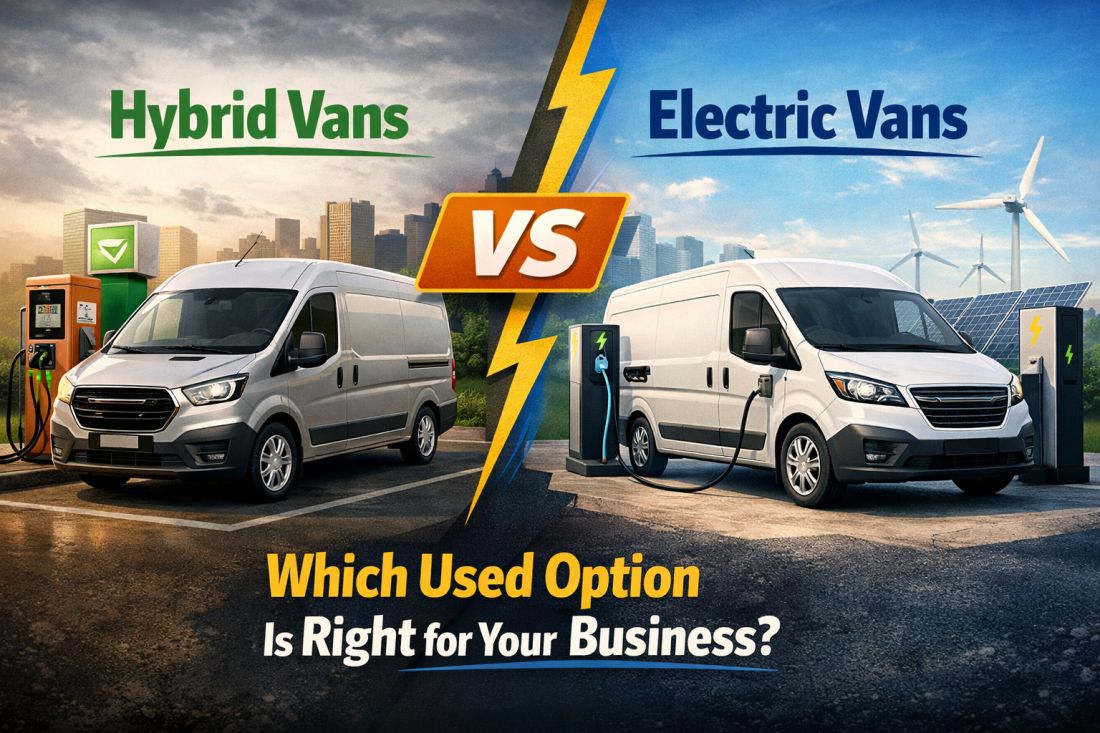
Hybrid Vans vs. Electric Vans: Which Used Option Is Right for Your Business?
Choosing between hybrid vans and electric vans comes down to how your business operates. Electric vans offer lower running costs, zero-emission driving, and are ideal for urban delivery routes with reliable charging access. Hybrid vans, on the other hand, provide flexibility, longer range, and easier refuelling—making them better suited to mixed or long-distance driving. When buying used, factors like total cost of ownership (TCO), charging infrastructure, and daily mileage will ultimately determine which option delivers the best ROI for your business.
Introduction: A New Era for Business Vans
The commercial vehicle landscape is shifting rapidly. With the UK petrol diesel ban 2030 approaching and clean air regulations tightening, businesses are being pushed toward smarter, cleaner transport solutions.
At the centre of this transition lies one crucial question:
Hybrid vans vs electric vans—which is actually the better choice for your business?
For many UK businesses—whether you run a delivery service, manage a fleet, or operate as a tradesperson—the answer isn’t as simple as choosing the newest technology. It’s about balancing:
- Cost efficiency
- Operational needs
- Environmental impact
- Long-term business strategy
And when buying used, the decision becomes even more nuanced.
If you’re exploring options through a trusted dealer like Carlton Motor Co, understanding the real-world differences between electric vs hybrid commercial vehicles is essential before making an investment.
Understanding the Basics: Hybrid vs Electric Vans
Before diving into costs and business use cases, it’s important to clarify what separates these two vehicle types.
Electric Vans (BEV – Battery Electric Vehicles)
Electric vans run entirely on electricity using a battery-powered electric vehicle powertrain.
Key characteristics:
- Zero-emission vans (no tailpipe emissions)
- Powered by rechargeable batteries
- Require charging infrastructure
- Lower maintenance costs due to fewer moving parts
These vehicles are increasingly popular for urban delivery vans and last-mile delivery vans, where predictable routes and access to charging make them highly efficient.
Hybrid Vans (PHEV / MHEV)
Hybrid vans combine a traditional combustion engine with an electric motor—often referred to as dual powertrain hybrid vans.
There are three main types:
- Plug-in hybrid vans (PHEV) – can be charged externally
- Mild hybrid vans (MHEV) – assist the engine but don’t run purely on electric
- Full hybrids – switch between petrol/diesel and electric
Key characteristics:
- No reliance on charging infrastructure
- Extended range compared to electric vans
- Seamless transition between fuel and electric power
This makes them especially attractive for hybrid vans for long-distance driving or businesses operating across varied routes.
Cost Comparison: Upfront vs Long-Term Value
When evaluating used electric vans vs hybrid vans, cost is often the deciding factor—but it’s not just about the purchase price.
Upfront Cost: Electric vs Hybrid
Traditionally:
- Electric vans = higher upfront cost
- Hybrid vans = more affordable entry point
However, the used market is changing rapidly. Businesses browsing options like used Ford vans or used Citroën vans will now find increasingly competitive pricing on both hybrid and electric models.
Running Costs and Savings
Here’s where electric vans often take the lead.
Electric van running costs include:
- Lower fuel costs (electricity vs diesel/petrol)
- Reduced servicing requirements
- Fewer mechanical failures
Hybrid van fuel costs:
- Still dependent on petrol/diesel
- Savings vary depending on driving patterns
Businesses focused on fuel savings electric vans can achieve significantly lower cost per mile electric van compared to hybrid alternatives—especially in city environments.
Total Cost of Ownership (TCO)
Looking beyond initial pricing, total cost of ownership (TCO) is critical for any business fleet electrification decision.
Factors include:
- Purchase price
- Fuel/energy costs
- Maintenance costs
- Tax incentives
- Resale value
Electric vans often win on TCO due to:
- Lower maintenance costs electric vans
- Access to government grants electric vans
- Reduced tax incentives electric vehicles
That said, hybrids may still deliver better ROI for businesses with unpredictable routes or limited access to charging.
Performance & Practicality: Which Fits Your Daily Operations?
Choosing between electric vans for business use and hybrid vans for business use ultimately depends on how your vehicles are used day-to-day.
Electric Van Range vs Hybrid Flexibility
One of the biggest concerns for businesses is range.
Electric van range:
- Typically 100–250 miles (depending on model and load)
- Ideal for electric vans for urban logistics
- Limited by battery capacity
Hybrid van range advantage:
- Combines fuel and electric power
- No “range anxiety electric vans”
- Ideal for long or unpredictable journeys
Charging vs Refuelling
Electric vans:
- Depend on charging infrastructure electric vans
- Require planning for routes and downtime
- Benefit from workplace charging solutions
Hybrid vans:
- Quick and easy refuelling hybrid vans
- No reliance on EV infrastructure
- Better for businesses without depot charging
Payload and Capability
Payload still matters—especially for trades and logistics.
- Payload capacity electric vans can sometimes be lower due to battery weight
- Hybrid vans often retain higher payload flexibility
Businesses exploring models like used Peugeot vans or used Renault vans should compare payload specs carefully when choosing between hybrid and electric options.
Environmental Impact & Sustainability: Beyond the Badge
For many businesses, the shift toward low-emission commercial vehicles isn’t just about compliance—it’s about reputation, efficiency, and future-proofing operations.
Electric Vans: Leading the Charge
Electric vans are at the forefront of sustainable business transport.
Key environmental benefits:
- True zero-emission vans at the tailpipe
- Significant carbon footprint reduction
- Alignment with clean air zone vehicles regulations
- Ideal for ULEZ-compliant operations in major UK cities
For companies operating in urban environments, switching to electric isn’t just beneficial—it’s increasingly necessary.
Businesses investing in green fleet solutions today are positioning themselves ahead of tightening environmental regulations and rising fuel costs.
Hybrid Vans: A Transitional Solution
Hybrid vans still play an important role, especially for businesses not ready to fully electrify.
Advantages:
- Reduced emissions compared to traditional diesel vans
- No dependency on charging infrastructure
- Easier integration into existing fleets
However, hybrids are often seen as a stepping stone rather than a long-term solution in the future of commercial electric vehicles.
Business Use Cases: Matching Vans to Your Operations
The real answer to “hybrid or electric van—which is better?” depends entirely on how your business operates.
Let’s break it down.
1. Urban Delivery & Last-Mile Logistics
If your business focuses on city-based deliveries:
- Electric vans excel in electric vans for urban logistics
- Lower cost per mile electric van in stop-start traffic
- Ideal for last-mile delivery vans
Best choice: Electric vans
Businesses using compact models from ranges like used Volkswagen vans often find electric options particularly effective in dense urban routes.
2. Long-Distance & Mixed Driving
For businesses covering long routes or rural areas:
- Hybrid vans eliminate range anxiety electric vans
- Easier refuelling during long journeys
- Better suited to long-distance vs city driving vans
Best choice: Hybrid vans
This is where reliable used hybrid vans offer flexibility without operational disruption.
3. Tradespeople & Service-Based Businesses
For tradespeople carrying tools and equipment:
- Payload and flexibility are crucial
- Charging downtime may not be practical
- Route unpredictability matters
Exploring options like used Mercedes-Benz vans can offer premium reliability across both hybrid and conventional setups.
Best choice: Often hybrid (but electric is viable with planning)
4. SMEs & Growing Fleets
For small and medium-sized businesses:
- Cost control and scalability are key
- Access to commercial van leasing and finance matters
- Transition planning is critical
A gradual company fleet transition—starting with hybrids and moving toward electric—can be the most practical approach.
You can explore flexible funding options through van finance solutions to support this shift.
Infrastructure & Practical Considerations
One of the most overlooked aspects of electric vs hybrid commercial vehicles is infrastructure.
EV Charging Infrastructure for Businesses
Switching to electric requires planning:
- Installation of depot chargers
- Understanding EV charging installation cost UK
- Evaluating fast charging vs slow charging vans
- Assessing local public charging availability
For businesses with fixed depots, workplace charging solutions can dramatically improve efficiency.
When Hybrid Still Makes Sense
Despite the push toward electrification, hybrids remain relevant when:
- Charging access is limited
- Routes are inconsistent
- Fleet downtime must be minimal
They provide a bridge while the UK’s charging network continues to expand alongside EV adoption trends UK.
ROI & Financial Strategy: Thinking Long-Term
Beyond upfront decisions, smart businesses focus on business vehicle ROI analysis.
Electric Vans: Long-Term ROI
Electric vans typically deliver:
- Lower lifetime costs
- Reduced fuel expenses
- Better alignment with future regulations
This makes them ideal for a forward-thinking fleet electrification strategy.
Hybrid Vans: Short-Term Flexibility
Hybrids offer:
- Lower initial risk
- Operational flexibility
- Easier adoption without infrastructure changes
For some businesses, this results in a stronger short-term ROI electric vans vs hybrid vans comparison—especially when immediate change isn’t feasible.
Making the Right Choice for Your Business
At this stage, the decision becomes clearer.
Choose Electric Vans If:
- You operate mainly in urban areas
- You want to reduce emissions and costs
- You have access to charging infrastructure
- You’re planning for long-term savings
Choose Hybrid Vans If:
- You drive long distances regularly
- You lack charging access
- You need maximum flexibility
- You’re transitioning gradually
Best Used Vans for Business in the UK
By now, the debate around hybrid vans vs electric vans should feel less theoretical and more practical. The next step is choosing the right vehicle—one that aligns with your workload, budget, and long-term goals.
Let’s explore some of the best vans for business fleet buyers currently available on the used market.
Best Used Electric Vans UK Businesses Should Consider
Electric vans are becoming increasingly accessible, especially for SMEs and growing fleets.
Top considerations when buying used electric vans:
- Battery health and warranty
- Real-world electric van range
- Charging compatibility
- Payload capacity
Popular options often include compact and mid-size vans ideal for electric vans for delivery companies and urban logistics.
Why they stand out:
- Excellent for electric vans for small business UK
- Lower electric van running costs
- Strong alignment with clean energy vehicles and future regulations
If your business operates primarily in cities, investing in a used electric van is no longer a risk—it’s a strategic advantage.
Best Used Hybrid Vans for Flexibility
Hybrid vans remain a strong contender, particularly for businesses needing adaptability.
Key advantages:
- Proven reliability
- No dependency on charging infrastructure
- Strong performance across mixed driving conditions
For businesses browsing options like used vans, hybrid models can offer a balance between innovation and practicality.
They’re especially valuable for:
- Hybrid vans for long-distance driving
- Businesses with variable routes
- Companies not yet ready for full electrification
Hybrid vs Electric Van Pros and Cons
To bring everything together, here’s a clear breakdown of the hybrid vs electric van pros and cons.
Electric Vans
Pros:
- Lower total cost of ownership (TCO) over time
- Reduced maintenance costs electric vans
- Zero emissions for urban compliance
- Strong long-term business vehicle ROI analysis
Cons:
- Charging infrastructure required
- Limited range compared to hybrids
- Higher upfront cost (in some cases)
Hybrid Vans
Pros:
- Greater flexibility and range
- Easier adoption for existing fleets
- Lower upfront cost electric vs hybrid (typically)
- No reliance on EV infrastructure
Cons:
- Higher hybrid van fuel costs over time
- Less environmental benefit than electric
- May become less viable as regulations tighten
Future Trends: Where the Market Is Heading
The UK van market is evolving quickly, and businesses need to think beyond today’s needs.
Key Trends to Watch
- Expansion of EV charging infrastructure for businesses
- Increased availability of cheapest electric vans for business
- Growth in EV adoption trends UK
- Stricter emissions rules in urban areas
- Accelerating shift toward zero-emission vans
With the UK petrol diesel ban 2030 approaching, electric vans are expected to dominate the market—making early adoption a competitive advantage.
Final Verdict: Which Used Option Is Right for Your Business?
So, when it comes to electric vans vs hybrid vans, what’s the right choice?
It ultimately comes down to how your business operates.
There is no universal winner—only the right fit for your specific needs.
Go Electric If You Want:
- Lower long-term costs
- Cleaner, compliant urban operations
- A future-proof fleet electrification strategy
Go Hybrid If You Need:
- Flexibility across varied routes
- Immediate usability without infrastructure investment
- A stepping stone toward electrification
Ready to Upgrade Your Business Fleet?
Whether you’re leaning toward electric or hybrid, choosing the right van starts with working with a trusted supplier.
At Carlton Motor Co, you’ll find a wide selection of quality vehicles from leading brands—helping you make the right decision with confidence.
From electric vs hybrid commercial vehicles to fully tailored SME transport solutions, the right van is out there—ready to move your business forward.
Frequently Asked Questions (FAQs)
1. Are electric vans worth it for business use in 2026?
Yes—especially for urban-based businesses. With rising fuel costs, improved EV charging infrastructure for businesses, and increasing demand for zero-emission vans, electric vans are now a cost-effective and future-proof option for many companies.
2. How long do electric van batteries last in used vehicles?
Most electric van batteries are designed to last 8–15 years or around 100,000–200,000 miles. When buying used, always check battery health reports and remaining warranty for peace of mind.
3. Do hybrid vans qualify for government incentives in the UK?
Some plug-in hybrid vans (PHEV) may qualify for limited incentives, but most government grants electric vans are focused on fully electric (BEV) vehicles. Incentives can also vary depending on emissions thresholds and business use.
4. What is the real cost per mile for electric vans vs hybrid vans?
Electric vans typically offer a lower cost per mile electric van, especially in city driving, due to cheaper electricity and fewer maintenance needs. Hybrid vans may have higher ongoing fuel costs but can be more efficient on longer routes.
5. Can electric vans handle heavy-duty business tasks?
Yes, but it depends on the model. While payload capacity electric vans can sometimes be slightly reduced due to battery weight, many modern electric vans are designed to handle demanding commercial workloads effectively.
6. Is it cheaper to maintain a hybrid or electric van?
Electric vans generally have lower servicing costs because they have fewer moving parts and no traditional engine components. Hybrid vans still require engine maintenance, which increases long-term costs.
7. How easy is it to install workplace charging for electric vans?
Installing workplace charging solutions is becoming more straightforward, with grants and support available in the UK. Costs vary depending on infrastructure needs, but many businesses see it as a worthwhile long-term investment.
8. Are used electric vans reliable compared to hybrid vans?
Yes. Electric vans are often very reliable due to their simpler mechanics. However, when comparing used electric vans vs hybrid vans, battery condition and service history are key factors to evaluate.
9. Which is better for couriers: electric or hybrid vans?
For electric vs hybrid vans for couriers:
- Electric vans are ideal for city-based deliveries and predictable routes
- Hybrid vans are better for mixed or long-distance courier work
The right choice depends on delivery patterns and access to charging.
10. Will electric vans become cheaper than hybrid vans in the future?
Trends suggest yes. As battery technology improves and EV adoption trends UK continue to rise, electric vans are expected to become more affordable—especially in the used market—making them increasingly accessible for businesses of all sizes.